From Xu Mu to Donald Trump: Do We Need An Ethics Just For Women?

In the second GOP debate, candidates were asked an inconsequential question about what woman they would want to see on the $10 bill. Three mentioned family members who were caregivers and one mentioned Mother Theresa. Other candidates did mention women who were political leaders, but it is worth noting how difficult it is for some to imagine, even now, a great woman who is not caring for others. Rather, it is still hard for too many people to imagine that leading and fighting for justice and rights is a form of caring for women that is worthy of admiration.

The idea that women should be good, as women, but not in the same way that men might be good, is about as old as civilization. Men have placed women in an impossible bind forever. For striving to be the best person possible, they are often denounced, attacked, or even murdered for stepping above their station. In the seventh century BCE, Chinese poet and princess, Xu Mu found herself in a position where she felt she must defend her kingdom (Wei) against the Di people (see Barbara Bennett Peterson’s essay about dutiful daughters of ancient China here). She successfully rallied her brothers and friends from neighboring kingdoms to preserve their home.

A man in her position would simply luxuriate in the waves of honor and gratitude flowing over him, but Xu’s position was more complicated. She is remembered for her chinese poetaccomplishments, but she also faced the wrath of the men in her community. She recorded her mixed experiences and feeling in a poem, “Speeding Away”:

Harshly though you may judge me,
From my course I will not veer.
Compared to your limited vision,
Do I not see far and clear?

Harshly though you may judge me,
My steps you never can stay.
Compared to your limited vision,
Am I not wise in my way?

I’ve climbed the heights of A Qiu,
Gathered herbs on the slope alone.
All women are prone to sorrow,
Each follows a path of her own.
The people of Xu still blame me,
Such ignorance has never been known.

Out of necessity, she stepped out of the role of good wife, daughter, and mother to save her homeland only to be criticized, but she didn’t accept the criticism. She said, “O listen, ye lords and nobles, Blame not my stubbornness so,” but she was denied the opportunity to emerge as an unvarnished hero. If she had been a man, she would have been good, but she could not be considered a good woman without qualifications. Her society had two concepts of virtue: one for men, and one for women.

A couple of centuries later, Plato advocated for a single measure of virtue and goodness. He felt that the ideal form of the good was universal, so it wouldn’t make sense for some people to aim at one ideal and others at another ideal, as there can only be one ideal. Consequently, women and men should aim at the same ideal, and men, just by chance, seem to have an easier time getting close to it. In Plato’s Republic, women would be trained and educated in the manner of men in hopes of achieving their highest possibilities of human perfection. Women who succeeded in being the most like the best men would be the best women. Men who resembled women, on the other hand, were the worst of men. In Plato’s world, then, Xu Mu might be admired for embodying the virtues of men, but she may still be censured for failing in the virtues of womanhood.

Plato’s unusual conception of a single standard for virtue for men and women didn’t last long. His student, Aristotle, found insistence on a single standard for goodness unnatural and unfair. Men and women, being different, should strive for different ideals. A woman should be a good woman and a man should be a good man. To judge a woman on her ability to be like a “good man” would be as absurd as judging a musician on his ability to make good shoes. Women should do what is right and natural for them, he believed. Under Aristotle’s guidance, Xu Mu would do better to leave saving the kingdom to the men, who would be more rational and better prepared for war.

Those who feel women have different strengths than men will insist that they are not misogynistic. No, they love women for the things women do best. These men (and women) say that women have civilized men, make peace in families, and rear children for greatness. They love their mothers, wives, sisters, and daughters as they make it possible for men to achieve greatness in war, politics, business, science, and philosophy. For example. Ronald Reagan explained his high regard for women by saying, “If it wasn’t for women, us men would still be walking around in skin suits carrying clubs.”  The problem is that the things these men suppose women excel at doing are also denigrated by society precisely because women do them, which means that women are devalued as well. In the third century BCE, another Chinese poet, Fu Xuan, summed up the problem nicely:

How sad it is to be a woman!!
Nothing on earth is held so cheap.
Boys stand leaning at the door
Like Gods fallen out of Heaven.
Their hearts brave the Four Oceans,
The wind and dust of a thousand miles.
No one is glad when a girl is born:
By her the family sets no store.

By this measure, to be the best woman possible is still to be something inferior to even a mediocre man. Women may not attain the highest levels of virtue.

Upon reading the works of many men claiming that women are inferior at birth, Christine Pisan, wrote a rhetorical query to God in 1405 CE:

“Alas, God, why did You not let me be born in the world as a man, so that all my inclinations would be to serve You better, and so that I would not stray in anything and would be as perfect as a man is said to be? But since Your kindness has not been extended to me, then forgive my negligence in Your service, most fair Lord God, and may it not displease You, for the servant who receives fewer gifts from his lord is less obliged in his service.”

Trapped in a paradox, extreme virtue is demanded of women while it is simultaneously denied them. By asking God to resolve the paradox, Pisan brilliantly illustrates that it is men, not God, who created the paradox, for no God would be so irrational. The binary is not only absurd; it is impossible.

In 1694 CE, Mary Astell eschewed literary maneuvers and stated directly that men are to blame for the situation of women. In her Serious Proposal to the Ladies, she remarked, “That therefore Women are unprofitable to most, and a plague and dishonour to some Men is not much to be regretted on account of the Men, because ’tis the product of their own folly, in denying them the benefits of an ingenuous and liberal Education, the most effectual means to direct them into, and to secure their progress in the way of Vertue.”  She goes on to say, “For since God has given Women as well as Men intelligent Souls, why should they be forbidden to improve them?” Astell issued a call to arms for women. Many have responded, and continue to respond.

In the late 19th century, Mary Wollstonecraft repeated the call: “To account for, and excuse the tyranny of man, many ingenious arguments have been brought forward to prove, that the two sexes, in the acquirement of virtue, ought to aim at attaining a very different character: or, to speak explicitly, women are not allowed to have sufficient strength of mind to acquire what really deserves the name of virtue.”  Wollstonecraft argued that two standards of virtue only serve to cement the power of men over women. A single standard will liberate both.

Simply choosing between a singular or dual ethics does not resolve the problem of misogyny, masculine power, or the systematic devaluing of anything “feminine.” If we choose to embrace a single ethics, the default position is to embrace the ethics previously associated with “masculine” virtue. To do so, women must themselves then disparage “feminine” virtues, which will mean debasing the activities traditionally associated with women. Thus, both women and men engaged in such pursuits are permanent held in reduced stature.

On the other hand, to embrace a dual system of ethics is to preserve the status quo. The male system of ethics continues to be the good and noble ethics while the female ethics is valued only for its contributions to maintaining the power and worth of male activities.

A single ethics that values all virtues and activities that are, in fact, valuable demands a complete deconstruction of gender and power so that it can be replaced with a non-binary system that embraces and venerates all activities that aid human flourishing. If nurturing children is a good, then it is good for both men and women. Such a system can have no concept of “women’s work” or “men’s work.” The idea that activities or dispositions (caring, assertive, protective, sensitive) are “masculine” or “feminine” must become a foreign idea. This will require radical resistance. Xu Mu and others like her began this battle nearly 3,000 years ago. After watching the second GOP debate, I believe it may take another 3,000 years to finish the war.

Ethical Codes: Moving beyond autonomy

Ethical theories can be divided in a number of ways, but one easy way is to separate the rule-based theories from theories that are not rule based. If you happen to be writing a code of ethics for your organization, you are going to drift toward rule-based theories because, in fact, you are writing a set of rules. These rules are important to ensure and protect the professionalism of your organization or profession. Ethical codes, made up of rules, establish a system of accountability for your members. Ethical codes are useful and often essential for professional organizations and vocational fields.

The rules in professional codes tend, whether stated or not, to focus on autonomy as begging devildefined by Immanuel Kant. His advice is generally interpreted somewhat loosely to say that we should only do to others what they have chosen to have done to them and use them only in ways that help them achieve their own ends. We should not use others only as a way to achieve our personal goals.

Based on this thinking, we would only provide people with treatment after receiving their fully informed consent, we would use people in our research only if they wanted to participate, and we would always be honest with clients and work in their best interest. Some would be a little shocked by the full implications of Kant’s views. For example, to have sex without the intent to procreate is to use both yourself and your partner as a mere means to pleasure. Lying to a murderer in order to save a child’s life would lead to you being charged with a crime in the event of the child’s death.

When it comes to integrating ethics into your professional practice, however, you may find rule-based systems too limiting and seek a theory that feels more inclusive of your entire professional life. It may help to look at two other groups of ethical theories: 1. Theories that focus on what kind of person to be. 2. Theories that focus on how to relate to others. This isn’t a neat division as these two types of theories overlap in significant ways, but it can be a useful starting point.

Virtue Ethics

Friedrich Nietzsche rejected rule-based systems of morality, which he referred to as forms of “slave-morality,” for morality aimed at character, which he called “master-morality.” He said, “It is obvious that moral value distinctions everywhere are first attributed to people and only later to actions.” For Nietzsche, it is the powerful who will see moral behavior as a by-product of being a great person while the weak will seek moral rules to protect their interests from others. Nietzsche suggests we should all strive to become great people rather than subjecting ourselves to the rules and will of others.

In a similar vein, Aristotle saw morality as a process of becoming a good person rather than following a set of rules, though he did say that things like theft, adultery and murder are always wrong, allowing for the existence of some moral rules. In general, though, a person becomes good, not by following rules, but by developing a virtuous disposition. This approach does emphasize activities, as it is through our actions that we develop our character. By choosing the actions a good person would choose, we become a good person, and by being a good person we tend to choose actions that are also good.

Relational Ethics

If you work with people on a regular basis, you may find a theory based on relationships conducive to moving beyond rule-based systems and ethical codes.

In the past, I didn’t really think of existentialism as a good foundation for a relational ethics as many existentialists focus on subjective experience, but Simone de Beauvoir’s “Ethics of Ambiguity” changed my mind. Beauvoir specifically tackles the problem of making ethical choices in an ambiguous world. Contrary to Immanuel Kant, she says it is not possible to arrive at certain rules to guide our behavior, but this does not mean we can shirk our obligation to act with concern for others.

Beauvoir says we experience life through our own experience by exercising our own freedom, but we do not experience it in isolation. If we do experience it in isolation, she says, “The saving of time and the conquest of leisure have no meaning if we are not moved by the laugh of a child at play. If we do not love life on our own account and through others, it is futile to seek to justify it in any way.” Our authentic self is expressed through free acts, but “[The individual] exists only by transcending himself, and his freedom can be achieved only through the freedom of others. He justifies his existence by a movement which, like freedom, springs from his heart but which leads outside of him.” Though our actions can’t be pinned down by a set of rules, we find meaning in life by seeking, willing, and nurturing the freedom of others in the world. In a sense, our affirmation of freedom is an exclamation of love.

Love may not seem an appropriate emotion to mention in a discussion of ethical relations with clients, but we don’t have to think of it in romantic or sexual terms. Love may be a matter of valuing others. Philosopher Martha Nussbaum argues that love is an essential feature of a liberal democracy. Some might quibble over how she defines love, but certainly it is a concern for others that drives both the ethics and political struggles of some of us. For example, she notes that we all live in a state of dependency at one time or another (childhood, old age if we are lucky to live long enough, and periods of impairment). Some of us live in states of dependency for our entire lives. Protecting the dignity of all requires us to recognize the value in others, and love for others is sufficient motivation to remove the shame and stigma of dependency. Our concern for others motivates our most basic moral impulses.

In this sense, both Beauvoir’s and Nussbaum’s views can be seen as forms of an ethics of care. If you are familiar with care ethics, though, you probably heard of it through the work of feminists such as Carol Gilligan and Nel Noddings. Care ethics was introduced as an alternative to theories seen to value men’s experiences over women’s. Feminists pointed out that women’s experiences have largely centered on care. Some will say caring is natural to women and others will say women have been forced into caring roles.

Over time, care ethics has become somewhat less gendered, meaning both men and women may recognize the value of care in their ethical lives. Noddings says our moral obligations arise between the “one-caring” and the “cared-for.” The response of the “cared-for” drive our actions. The most debilitating kind of existence, she says, is to care for someone who is unable or unwilling to respond to care. Controversially, she says, “We are not obliged to act as one-caring if there is no possibility of completion in the other.” This means are have no obligations to “the needy in the far regions of the earth.” Philosopher James Rachels objects, saying, “A more sensible approach might be to say that the ethical life includes both caring personal relationships and a benevolent concern for people generally.”

Some philosophers see narrative ethics as a logical extension of an ethics of care. Narrative ethics emphasizes the role of stories in our moral lives. Most of us grew up hearing “didactic stories” about foxes and wolves and so forth that left us to learn “the moral of the story.” This is an important feature of narrative ethics but stories need not be didactic to aid our moral reasoning or impulses. We may also learn from both fiction and true personal narratives.

Fiction can help us broaden our imagination of what life is like for others. It helps us to understand feelings and motivations outside our own experience. It gives us a way of testing different points of view and outlooks. Similarly, listening to or reading the accounts people give of their own lives gives us greater insight into their emotional lives and helps us to develop an empathetic response. Our moral obligations and intuitions look quite different when we are better able to “read” the minds and motivations of others. Those who work intimately with clients on a regular basis are immersed in their stories. In this sense, ethics is integral to the practice. I personally think it is helpful to think of ethics as being embedded in our work rather than a separate function that requires attention outside of our “real job.”

Again, autonomy plays an essential role in developing ethical codes of behavior. If we fail to respect the autonomy of others, we violate them in ways that are always wrong and often illegal. Still, other ethical approaches can expand the role of ethics in our practice and help us pursue ethics that really is beyond mere compliance.

How to Grieve for a Child: Al-Kindi’s Advice

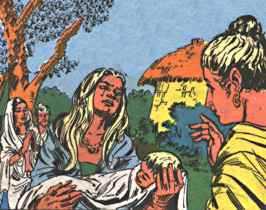
While philosophers seem to thrive on conflict and would really have nothing to say at all without substantial disagreements, they are remarkably consistent on how to respond to death, dying, and loss. Most recently, I have turned to the work of Al-Kindi , who lived Al-kindifrom about 801 to 866 in Baghdad, for advice on how to respond to grief. Al-Kindi gives us the example of the mother of Alexander the Great.

As his death approached, Alexander wrote to his mother to prepare her for the loss of her child. As Al-Kindi tells it, Alexander said, “Do not be content with having the character of the petty mother of kings: order the construction of a magnificent city when you receive the news [of the death] of Alexander!” Everyone in Africa, Europe, and Asia should be invited to a great celebration of his life with one proviso, that anyone struck my similar misfortune should not come. After his death, his mother was mystified that no one obeyed and attended the funeral until someone pointed out to her that no one had ever escaped the type of misfortune she was experiencing and those with similar losses were told not to come.

Al-Kindi says Alexander’s mother exclaimed, “O, Alexander! How much your end resembles your beginning! You had wanted to console me in the perfect way for the misfortune of your death.” This story of consolation is similar to the Buddhist parable of Kisa-GotamiKisa Gotami who lost her young son and was advised by the Buddha to collect a mustard seed from every family that had not lost a close relative. Of course, she was unable to find any family that had not faced loss, so she realized her suffering was universal and took comfort in the teachings of Buddhism.

German philosopher Arthur Schopenhauer, himself influenced by Buddhist texts, also points us to the suffering of others for comfort: “The most effective consolation in every misfortune and every affliction is to observe others who are more Schopenhauerunfortunate than we, and everyone can do this. But what does that say for the condition of the whole?” Indeed, the suffering of others may make us feel petty for our complaints, but it does little to relieve our pessimism about life. But maybe we just cling to life too tenaciously.

Al-Kindi tells us that all our possessions are only on loan to us and that “the Lender has the right to take back what He loaned and to do so by the hand of whomever he wants.” He says we should not see our loss as a sign of disgrace; rather, “the shame and disgrace for us is to feel sad whenever the loans are taken back.” He is speaking of possessions in this instance, not of children, but I’ve heard many people say that our children are only “on loan” from God, who can call them home at any moment. I personally have never found any comfort in this, and I wonder whether anyone has ever felt the brunt of loss softened by the thought of a merciful God calling in His loans.

No matter what happens, Al-Kindi tells us we should never be sad, as sadness is not necessary and “whatever is not necessary, the rational person should neither think about nor act on, especially if it is harmful or painful.” Many philosophers echo this sentiment. We should trust that God has created the world that is perfect according to God’s design; therefore, we should accept the vicissitudes of life with equanimity. This advice is almost universally dispensed and almost universally not followed for a simple reason: sadness is really an involuntary reaction to loss and pain.

Al-Kindi tells us the death is not an evil, because if there were no death, there would be no people. By extension, if what is thought to be the greatest evil, death, is not evil, then anything thought to be less evil than death is also not evil. As such, we have no evil to fear in our lives. From these assertions, Al-Kindi claims that we bring sorrow to ourselves of our own will. A rational person would not choose such a form of self-harm, so depression and mourning can be controlled through the proper exercise of reason.

Most ancient philosophers, and many contemporary ones, will tell us that letting our rational nature rule our emotional nature will ease our pain in the face of loss. Certainly, a rational examination of death, life, and loss helps us to make sense of our suffering, but it does not eliminate suffering. In fact, if you see grief as a moral failing, which many thinkers have said it is, I believe your suffering is compounded. Grief, hard enough to bear on its own, becomes a catalyst for an explosion of guilt and shame.

While it is important to examine the causes of our suffering and explore what meaning loss brings to our lives, denying the necessity of grief is as useless as denying the necessity of breathing. While I can accept that Al-Kindi’s description of death is accurate, it only helps me come to terms with the prospect of losing my own life. For each of us, our own death brings a promise of relief, but the death of our loved ones only brings relief when they are so burdened by suffering that we can no longer bear to see life oppressing them.

Death is still an evil, because it robs me of the people that make my life meaningful. It threatens to rob me of the people, indeed, who may make my life bearable. It is possible to imagine that death is not an evil, but, more importantly, we must recognize that love is certainly a good, and to lose those we love is an excellent reason to mourn. Mourn freely, I say, without guilt and without shame.

Seeking God in Silence

Painter Fang Min has a series of paintings featuring Buddhist monks seeming happy enough despite an insect perched on or near their faces (you can see examples here and here). When I saw the exhibit in China, a small explanation accompanied the paintings. I Monks jdon’t remember it in detail, and I can’t seem to find it anywhere online, but the story was fairly straightforward. It was about a monk who left the hustle bustle of the city to see peace and tranquility in the country only to find that his meditations were still disturbed by the sounds of the country: farmers working, livestock making noises, and so on. He retreated further away, deep into the woods, but still found the sounds of nature disturbing. Eventually, he fled deep inside a cave to find absolute quiet—except for the sound of a single insect. Frustrated that he still was unable to secure tranquility, he sought out the Buddha for advice. The Buddha told him, of course, that he must seek tranquility inside himself, not demand it from the world around him.

This reminded me of my experiences with the Religious Society of Friends (or Quakers). The meetings I attended were unprogrammed, which means Friends sit in silent reflection receptive to spiritual prompting. Some people refer to this as “silent worship” or a “silent meeting.” This isn’t really accurate, as Friends are expected to speak when moved to do so. Nonetheless, some people would remark on how wonderful some meetings were when they remained especially quiet. On other occasions, some attendees would complain of being distracted by the sounds of people speaking, children, animals, neighbors mowing lawns, airplanes passing overhead, and on and on.

I always thought that if I were to sit in silent reflection, it meant that I would not make any noise, not that I wouldn’t hear any. If I understand correctly, Quakers have the idea that God is in everything and everyone. For me, listening for God is just to listen to whatever happens to be in the universe. I never took it that God could distract me from God. The work is in the contemplation I am doing, not in finding silence.

The composer John Cage said that music never stops, only listening does. To help people listen, he composed a piece that was four minutes and 33 seconds of silence. During that piece, the audience listened to ambient sounds in the environment (or even the sounds of their own bodies). Cage said that anyone can do this at any time. It just takes an aesthetic attitude. He wasn’t trying to create four and a half minutes of silence. He was trying to create four and a half minutes of attention. Some people did not like being forced into a meditative state, but some people don’t like anything.

I suppose some of this depends on what one seeks when one seeks God. Spinoza described God as being infinite and eternal. God occupies every point in space and every moment in time. What then, is not God? Everything in the universe must be God, and God must be everything in the universe. To believe anything else is to limit God’s presence and power. I think this is why Einstein said he believed in the God of Spinoza.

Everything you hear today is the voice of God. Everything you see is the presence of God. Keep your eyes and ears open, please.

My Actual Dream About Peter Singer

The following is an actual dream (nightmare) I had. As far as I know, it doesn’t mean anything. I have no idea why Peter Singer was in it, but I only wish him good health and safe travels.

I am crossing riotous waters on a suspended steel walking bridge composed of steel cables with metal planks bolted to them on either side. As I walk, a storm moves in quickly and pelts me with blinding rain that makes footing unsure. As my feet slip on the metal planks, the planks begin to come undone and slide off the cables. I am forced to cling to the cables and pull myself up onto the loading dock on the far side of the bridge.

As I take cover under an overhang on the dock, I see Peter Singer in a white cargo van on an elevated roadway or ramp of some kind. To my horror, he drives off the ramp and crashes nose first onto the concrete dock below. The van is badly mangled and I fear he is dead. I think to call 911 but realize my phone is in the van. Just then, he pops through the broken glassbroken glass of the van like a jack-in-the-box and says, “Well, that was lucky!” in a comic fashion to the sound of laugh track laughter. Before I can feel any relief, he collapses and appears dead.

I walk to the nearest person (the dock seems crowded with rubberneckers now) and ask, “Did you call 911?” She says, “Well, HE won’t call!” [More laugh track.] Finally, I am overwhelmed and start to walk away. I hear a voice call after me, “I’m sorry. Did you know him?” [More laugh track.] I say, “No, but I’ve been reading his books for decades.” [Laugh track.]

The voice replies, “I know what you mean. It takes me a long time to get through a book, too.”

Silence.

Ebola and the ethics of international drug testing

Ebola has been around for nearly 40 years now, and until recently the public was unaware of any available treatments or treatments in development for the disease. In fact, there is no market incentive for pharmaceutical companies to develop treatments as most of its victims are too poor to buy medicines. If and when Ebola spreads to more affluent parts of the world, of course, pharmaceutical companies will adjust their research and development strategies.

As market incentives for development of treatments do not exist, it falls to governments to fund research into possible treatments and vaccines. As Marie-Paule Kieny, assistant director-general of the World Health Organization (WHO), pointed out, “If it hadn’t been for the investment of a few governments in the development of these drugs, we would be nowhere.” Much of the funding for research has come from the United States, not from humanitarian concerns for Africans, but for domestic concerns. According to a Globe and Mail article by Geoffrey York, “most of the research on Ebola treatments has been financed by the U.S. government, often because of fears that the Ebola virus could be used aesculab-stabas a form of bioterrorism.” Be that as it may, it is a relief to know that someone is working on treatment and prevention.

As the disease has occurred in Africa, you might expect that research on it should also occur in Africa with robust drug trials being conducted in an ongoing basis, Bioethicist Arthur Caplan  says it is unreasonable to expect the research to happen in Africa. He wrote, “Privileged humans were always going to be the first ones to try it. ZMapp requires a lot of refrigeration and careful handling, plus close monitoring by experienced doctors and scientists—better to try it at a big urban hospital than in rural West Africa, where no such infrastructure exists.” ZMapp is the drug given to the Americans who contracted Ebola in Africa before being flown back to the US for treatment.

It might be possible for pharmaceutical companies to build such infrastructure, but Caplan encapsulates the real reason research does not happen in Africa nicely: “Drugs based on monoclonal antibodies usually cost a lot—at least tens of thousands of dollars. This is obviously far more than poor people in poor nations can afford to pay; and a tiny company won’t enthusiastically give away its small supply of drug for free.” Enthusiastically give away? No, they won’t even develop the drug in the first place.

Now that an experimental treatment (ZMapp) does exist, should it be tested on Africans? Bioethicist George Annas says, “If the drugs we are currently working on have been shown to be reasonably safe, and if there is realistic and robust African review and individual informed, voluntary consent, use of American-developed drugs in Africa could be justified.” Annas is here emphasizing the protection of possible African research participants rather than explaining why only the privileged should receive the drug, and he has good reason.

It isn’t as though the lack of infrastructure in Africa has prevented drug trials from taking place there in the past as you might imagine from the debate over Ebola drugs. In fact, testing has raised serious issues of exploitation in the past as drugs were tested on vulnerable populations with no intention of ever providing those same populations with any treatments that might be developed. In 1994, the HIV drug, AZT (zidovudine) was found (in a study known as AIDS Clinical Trials Group 076)  to prevent transmission from HIV-positive mothers to their infants. The study was considered important in the development of drugs to treat AIDS, but there were no plans to provide AZT to the communities where it was tested once the clinical trials concluded. Research subjects in Africa bore the risks associated with taking experimental medications but would not see the benefits of the medications developed.

As there is no market incentive for pharmaceutical companies to develop treatments while protecting research subjects in vulnerable populations, it is up to governments to help promote treatments for unprofitable diseases. This has obviously happened to an extent., but we could, and should, do more. Philosopher Thomas Pogge has initiated a plan to help improve the situation. He has proposed a Health Impact Fund  that would provide a sort of artificial market incentive for companies to develop otherwise unprofitable treatments. Under the plan, governments would contribute to a fund that would then be distributed to pharmaceutical companies based on their ability to develop drugs that would have the greatest health impact. In order to receive payments from the HIF, companies would agree to provide treatments at cost anywhere in the world. I don’t know whether the Health Impact Fund will provide a solution to treating diseases that primarily affect the poor, but it certainly represents the kind of thinking required to address these serious issues.

If we are not motivated by the suffering of others in the world, and it appears many in affluent countries are not, we may do well to recognize that diseases do spread beyond all borders. Diseases that do not affect us today may well affect us tomorrow. The so-called “free” market is obviously not the solution, so we will do well to consider other options.

If correlation isn’t causation, what is?

If you get into any kind of discussion of a controversial topic these days, someone is likely to try to shut you down with a simple “correlation does not prove causation, stupid” kind of refrain. And they are correct that correlation cannot prove causation (a funny website named Spurious Correlations has gone viral). The rub, though, is that correlation cannot prove causation because causation is, shall we just say, difficult to prove. Further, if you want to find the cause of something (say X), you are really going to need to look for things that correlate with X.

For example, say a certain area of the world has begun to have earthquakes regularly when they were almost nonexistent before. If you find that a certain type of gas extraction had begun just before the increase in earthquakes, you might wonder whether this correlation might offer any hints into the cause of the earthquakes. If you could find no correlation between the earthquakes and anything else, you might begin to describe the earthquakes as mysterious and unexplained.

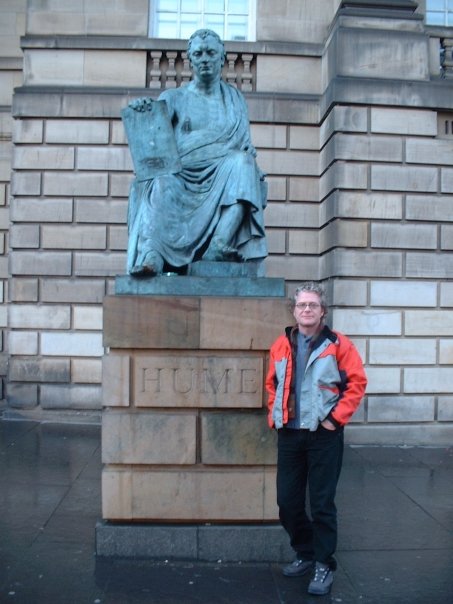
Why? Because correlation is the biggest hint of where causation might be found. The Hume and Ifamous Scottish philosopher, David Hume, laid out some rules for judging causes and their effects. The third rule says there must be constant union between the cause and effect (and it is this correlation that “chiefly” constitutes the causal relation). In fact, it is the constant conjunction between like causes and like effects that reinforces or justifies our belief in causation itself. In other words, without correlation, we would have no reason to believe in causation at all.

Hume also points out that we can observe correlations, but we cannot observe causation. If you ask someone to describe an observation of causation, you will hear a story about a correlation. Because causation cannot be directly observed, our belief in causation cannot be verified. Our belief in causation comes from an instinct to believe in causation and not from any rational argument or proof of causation. Hume points out that even animals are born with a belief in causation even without the benefit of the rational ability to study philosophical or scientific arguments.

To be sure, once you’ve identified a correlation, you can begin the work of determining whether the supposed causes are actually responsible for the effects you’ve observed. You may not get proof, but you can get more and more evidence so that your belief in the cause is more and more justified. No matter how much evidence you get, though, you will have started with a correlation.

So, it is true that correlation does not prove causation, but a statistically significant correlation is a good place to begin your search for a cause. If you know of a way to find causation without first observing a correlation or to prove causation, please leave it in the comments.

Is there a wrong way to grieve?

Over the past few months, I’ve written of several philosophers of the ancient past who taught that grief should not overwhelm us before themselves becoming overwhelmed by grief. Stoic philosophers taught that we should understand that death is nothing to fear or mourn, if only we can have the proper understanding, but the emotion of grief trumps rational explanations every time. I would conclude, then, that we should not attempt to suppress or diminish our grief but should let it unfold naturally and grieve for as long as necessary. Criticizing the grief of others seems counterproductive at best.

But this left me wondering whether there is a wrong way to grieve. What obligations can the bereaved have to others? Obligations to the dead? Does grief suspend normal obligations?

Like the rest of the world, I don’t know what caused Spc. Ivan Lopez to go on a shooting rampage at Ft. Hood. He certainly had experienced a great deal of stress in his life and had good reason to experience problems with mental health. According to a CNN article by Ray Sanchez, Lopez’s father said the recent deaths of his mother and grandmother, medical treatment, and changes related to transfer of military installations “surely affected his condition.” Grief often becomes unmanageable when it is combined with other complications, obstacles, and challenges. We do well not to ignore the impact of grief on those around us. We are part of a community, and the health of the community deals in part on how well we respond to grief.

For an example from fiction, I’m reminded of “A Rose for Emily” by William Faulkner. Emily has much to grieve for: When she loses her father, she loses a loved one but also status, wealth, predictability, and honor. She responds by simply refusing to acknowledge her loss. In the beginning she denies that her father is even dead. Eventually, she relents and permits him to be buried, but continues her life as if nothing has changed. Her neighbors go along out of pity, not respect. As you probably remember, Emily eventually takes a lover from out of town, kills him, and sleeps with his body for the rest of her life.

Emily’s neighbors had tried to offer condolences to her when her father died, but she denied his death. After his death, the neighbors reacted to her with a mix of compassion, respect, suspicion, and disgust, but they also lacked the will to intervene as Emily continually pushed them away. They left Emily with her privacy and, as much as possible, a little dignity, which only led her to more extreme and destructive measures.

If I say that Emily grieved unethically, you may say that grieving wasn’t the core problem; rather, she was refusing to accept change. But grief is always a reaction to change, and all change is annihilation. The bereaved will often say the whole world changed, and that is exactly what has happened. Emily’s world changed, but she refused to accept either her father’s death or her change in fortune. By killing her lover, she tried to preserve a moment forever. Emily’s response to grief was understandable but not excusable. Then again, perhaps her neighbors did not respond ethically to Emily’s grief. The neighbors did reach out to Emily, even with follow-up visits, but failed to intervene more forcefully. Are they obligated to take matters into their own hands?

I recently had the opportunity to hear author Cheryl Strayed speak on her latest book, Wild, which is about Strayed’s own response to her mother’s death. Strayed is a talented and courageous writer and proficient speaker. As she talked about her grief journey, she only lost her composure once. She said that after her mother’s death she became the kind of daughter her mother would not have wanted her to be. She described her adultery, promiscuity, and substance abuse through tears that evaporated as she moved on to discuss how she began to manage her grief more positively (ethically?).

I ask whether there is an ethical way to grieve. We can see that people, overcome by grief, behave in ways that are certainly unethical in most contexts, but we may have such compassion for the bereaved that we soften our judgment of them. “What she did was wrong,” we may say, “But I can see why she did it. I might have reacted the same way.” But this may be true anytime someone acts unethically. In the exact same situation, I may have acted as Bernie Madoff acted. In fact, we have all acted in unethical ways. We had our reasons (grief, exhaustion, addiction, depression, or whatever), but our actions were unethical.

So what helps people behave more ethically? Jean-Paul Sartre, the famous Existentialist philosopher, says that with each of our actions we choose “the good.” He doesn’t mean we always make good choices, but given our options, we choose the one we thought was best, which means we write our ethical values for public view by the actions we choose. In this environment, other people become our hell. Nothing is more damaging to us than being trapped by the others’ perceptions of us.

When we choose an action, we are choosing the one that seems best to us at the time. The problem is that some of us have run out of good ideas for what to do. We often explain ourselves, rightly, by saying, “I didn’t know what to do!” If we had more ideas, we would have more choices and could make better decisions. Sartre claimed we have absolute freedom, but really we can increase our freedom by increasing the number of actions we have in our consciousness. Sartre saw others as our judge, jury, and executioner, but they can also become our community.

It is Sartre’s companion and lover who had a broader vision for existentialist ethics. Simone de Beauvoir was able to see the positive importance of others in our lives. Beauvoir declares “freedom can be achieved only through the freedom of others.” If we want to be free, we must seek our freedom through the freedom of our community, and our freedom grows out of our love. Beauvoir says, “If we do not love life on our own account and through others, it is futile to seek to justify it in any way.” Without valuing others, our life truly loses meaning, and we will lose all hope.

When I was in China, I once thanked someone for helping me with a problem, and she responded, beautifully, “When we help each other, we are free.” Indeed, it is the only way for us to become free. And it is the only way for us to have more good ideas of what we can do.

Why I hate Steak and BJ Day

On March 14, I learned of a new holiday known as Steak and BJ Day. Known as a humorous response to Valentine’s Day, the idea behind Steak and BJ Day is that women get all the attention on Valentine’s Day (men spend about twice as much as women) and there should be day for men to get what they enjoy, which is, obvious to the creators and celebrants of this day, steaks and blow jobs. It’s just a joke. It’s all in fun. If you don’t like it, don’t participate.

Many women seem to feel this is a fair way to compensate men for being so generous on Valentine’s Day, apparently having no qualms describing their romantic relationships as blatant prostitution. (“After all the trouble he went to for Valentine’s Day, I owe him something. Teehee.”) If people want to live their lives exchanging gifts for sexual favors and cooking services, I have no problem with it, so long as everyone knows what is going on and feels comfortable commodifying relationships. I have a different problem with this holiday.

Steak and BJ Day is based on a crude masculine stereotype that is inoffensive to men who live for their next steak and treat of oral sexual gratification. All men are supposed to want this. Any man who doesn’t love and know how to prepare steak, in fact, should turn in his man card, according to this web site.  Again, it is just a joke. If you don’t love steak, you are just a girl. Hilarious. I mean, who would want to be a girl? It isn’t meant to offend anyone. Any man who objects to this stereotype is himself at risk of being told he is too sensitive or not a “real man” or a “typical man.” People who are less kind will tell him he is a sissy, wimp, girl, or any number of nastier anti-gay slurs.

So, men who don’t want these things should turn in their man cards (see this site for an uproariously funny rendition of this ). “Turn in your man card” is the functional equivalent of “you throw like a girl.” As much as people insist this is all just a joke, the consequences of masculine stereotypes are severe. Children who fail to express their gender in expected ways are more likely to be bullied and abused and suffer from depression and PTSD (see a study on the risk here). You may have heard what happened to a boy who liked My Little Pony. Further, anti-gay attacks are typically in reaction not to sexual activity but to perceived non-conformity to gender stereotypes (a 1982 study by Joseph Harry found that “effeminate” men are twice as likely to be victims of gay bashing than gender conforming men), which means gay-bashing victims include many heterosexuals or children with no obvious sexual orientation or identity at all.

This bias against unmanly men is nothing new. Through an essay by Elizabeth V. Spelman, I found a passage in Plato‘s Republic describing what kinds of men would be inappropriate for a decent society:

We will not then allow our charges, whom we expect to prove good men, being men, to play the parts of women and imitate a woman young or old wrangling with her husband, defying heaven, loudly boasting, fortunate in her own conceit, or involved in misfortune and possessed by grief and lamentation—still less a woman that is sick, in love, or in labor.

People sometimes want to credit Plato with an early form of feminism, because he felt women should be trained in the mode of men. Like many today, he felt it was quite admirable for women to strive to “achieve” masculine traits. Men being the highest form of human perfection, Plato thought it made sense for women to strive for the masculine ideal. The man who would follow the lead of women, however, would be lowering himself below his station and be pathetic at best. His view persists as we encourage girls in sports, mathematics, and leadership, but forbid boys from nurturing, crying, creativity, and careers related to care and empathy. It seems odd to me that eating meat is considered particularly masculine, but vegetarian men are portrayed as being the least manly of all. The hatred and devaluation of “feminine” men is an extension of the oppression of women. Feminist philosopher Jean Grimshaw points out that the conception of a feminine ideal depends on “the sort of polarization between ‘masculine’ and ‘feminine’ which has itself been so closely related to the subordination of women.”

The hatred of “effeminate” men is an extension of the devaluing of the feminine, but it leads to violence and oppression of both men and women. In order to be free, we must assign equal value to all human activities and emotional dispositions. Leadership and assertiveness have their value, but we will not last long in a society devoid of nurturing, care, and concern. Another feminist philosopher, Genevieve Lloyd, puts it this way:

If the full range of human activities–both the nurturing tasks traditionally associated with the private domain and the activities which have hitherto occupied public space–were freely available to all, the exploration of sexual difference would be less fraught with the dangers of perpetuating norms and stereotypes that mutilated men and women alike.

I added the emphasis on the word “mutilated,” because I am grateful to her for using such strong language to describe accurately what sexist stereotypes have done to us. I often hear women struggle to describe how sexism hurts men. Some say it discourages men from working hard or from caring for others, but they miss the fact that sexism destroys men from the inside out. Very few men escape childhood without having their masculinity questioned and challenged. And too many men have responded violently to a woman who has taunted them with, “If you were a real man, you’d . . . !” The constant demand that a boy or man prove his resilience, indifference to pain and fear, and lack of compassion rends men from their humanity. Those who resist are often trampled under foot and left with depression, addiction, anxiety, and self-loathing. Too often, it ends in self-destruction through addiction, isolation, or suicide.

You may be thinking I take things a little too seriously. No one would kill himself over Steak and BJ Day. I agree, but I am asking you to consider the good of masculine stereotypes, and I tell you they serve no purpose and provide no benefit. The cumulative effect of such stereotypes is to prevent men from being whole and to destroy those who are uninterested or unable to fulfill the social expectations such stereotypes are designed to enforce.

For the love of humanity, please free us all.

See also: Why I Hate Valentine’s Day

Sunshine disinfects nothing

I seem to remember Jon Stewart once playing a clip of a politician declaring that sunshine is the best disinfectant. After the clip, Stewart warned viewers that using sunshine as a disinfectant could lead to a nasty infection. In response to the Sunshine (Open Payments) Act, bioethicist Mark Wilson sounds a similar alarm in a recent paper.

For years, many people, including myself, have argued that industry payments to physicians should be disclosed to the public, so that we will all be aware of possible financial conflicts of interest (FCOI). My hope was that disclosing conflicts of interest might help actually reduce corruption or even simple bias in medical practice, but Wilson points to our experience of Wall Street before and after the 2008 financial collapse to show that knowledge of conflicts of interest does not prevent them. Rather, disclosure only shifts the burden for reducing FCOI to patients, who are least empowered to eliminate them. Rather than fixing the problem, Wilson claims the Sunshine Act only “mythologizes transparency.”

Wilson pointed me to a paper (“Tripartite Conflicts of Interest and High Stakes Patent Extensions in the DSM-5”) in Psychotherapy and Psychosomatics that illustrates the problem. If you want the details, you can read the paper yourself, but I will skip right to the conclusion, which I admit is how I read most papers anyway:

[I]t is critical that the APA recognize that transparency alone is an insufficient response for mitigating implicit bias in diagnostic and treatment decision-making. Specifically, and in keeping with the Institute of Medicine’s most recent standards, we recommend that DSM panel members be free of FCOI.

Telling people about FCOI does not reduce bias and corruption; it only offers an opportunity for people to be aware that bias and corruption exist. I think it is valuable that the Sunshine Act is making people aware of FCOI. In response, though, I hope we will take steps to reduce FCOI. Unfortunately, the burden is indeed shifted to voters and consumers. The most disturbing and obviously true statement Wilson makes in his paper is this: “Until politicians end their own commercial COIs, the Sunshine Act will likely remain the governance order of the day.”

We can’t hope the experts will solve this problem. We must demand that FCOI are eliminated.