On Bodily Autonomy and Geriatric Femininity (#poem #NaPoWriMo)

grayscale photography of man carrying baby
Photo by Silvia Trigo on Pexels.com

They never ask, the old ladies.
They just hug, pinch, kiss and
Cuddle at will. Babies are theirs,
You know, and they do love them
So much. I guess it isn’t their fault,
No one ever told them they aren’t
Free to touch at will. I once told
A woman to get her hands out of
My hair, and she said no man
Had ever asked her to stop
Touching him before. As an old
Lady, I’m sure she became another
Of the baby grabbers, the snogglers,
The unwanted snugglers, making
Babies turn away and stretch
For Daddy’s protection and loving
Embrace. And the Daddies will say,

“Don’t touch the babies. They are not
Yours to soil with dry lipstick and crepe
Paper skin. You may have thought your
Hands were never unwelcome, but
My babies know the master of their fate.”


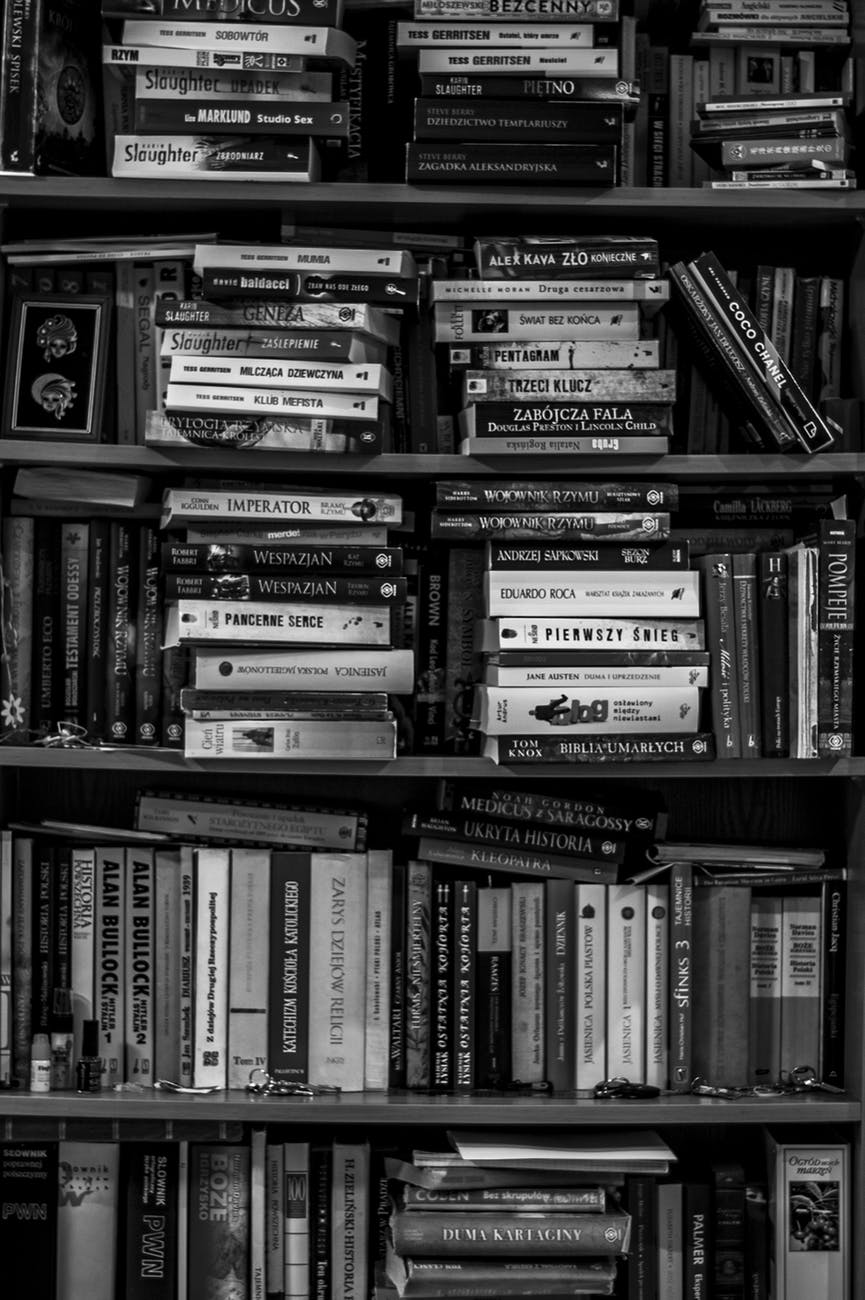
The Burdened Bookshelf as Will and Representation (#poem #NaPoWriMo)

full frame shot of shelf
Photo by Pixabay on Pexels.com

Each mover, save one Renaissance man
Of fellow feeling, complained of the books
And the bookshelves to display them.
Why would anyone move these thousands
Of miles and from house to house when
They are so obviously rarely used?

But the bookshelves, fully loaded, serve a purpose:

For starters, they tell anyone curious enough to look
Where and how my intellectual development has unfolded.
Second, they show all the languages I have tried to learn,
Even if I have been persistently unsuccessful.
Third, they show where my interest lie in the arts,
Music, history, literature, philosophy, and politics.
Fourth, they show that I’ve reached beyond the narrow
Confines of my family, neighbours, and local sports teams.

If you wanted to understand me, you could get a pretty
Good idea by browsing my bookshelves thoughtfully.
You’ll surely see that I am a person of profound refinement,
A deep thinker who has considered a universe of ideas.

And if you don’t see that immediately, perhaps
You’ve stumbled across some of my wife’s books.

The Impact of Utilitarianism on Unsuspecting Feet (#poem #NaPoWriMo)

close up photography a baby s left foot
Photo by Dominika Roseclay on Pexels.com

The prompt today was to use a homophone or homonym. I can’t take credit for the example, which was offered by a former student.

After her purported reading
Of Jeremy Bentham,
She said he believed
She should do whatever
Made her happy.
For example,
She should spend
Her paycheck on new shoes,
Because they will be good
For her sole.

On the Disastrous Art of Losing (#poem #NaPoWriMo)

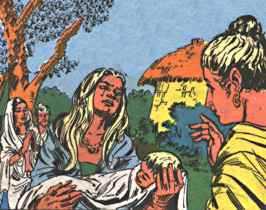
Kisa-GotamiOn our first meeting, she
Described me as a “near Buddhist,”
Meaning, of course, that I had
The ascetic qualities of a monk.
 
And it was true that Siddhartha
Helped me lose my appreciation
For things. You learn first that
Attachment is suffering.
 
But Elizabeth Bishop was more
On my mind. Like her, I had
Lost things every day, and
Most of them didn’t matter.
 
We all get practice losing things,
Of course, and we learn it isn’t
A disaster; lives are nothing
More than crude or elegant mandalas.
 
Everything will be wiped away,
And there is no use torturing
Ourselves with excessive hand-wringing,
Longing, covetousness, or desire.
 
Push on, let it go, they’re only things
After all, and the universe continues
With no pause. And still, I sit
Thousands of miles away
 
Thinking of you.

Life, Love, and Leaving in Livingston, Texas (#poem #NaPoWriMo)

Screenshot 2019-04-11 at 08.07.26In a previous century my grandfather died
Only weeks after my great uncle.
A few weeks later, my grandmother
Made a quick trip to the grocery store
And returned to find her house in flames.

Having lost her brother, husband, and home
In a matter of weeks, my uncle Skeet
(so known because as a child he was
No bigger than a mosquito or “skeeter”)
Tried to comfort his sister.

He was a country preacher with a small congregation
In the Piney Woods of East Texas, and he
Always turned to Jesus, of course, in times like these.
Attempting reassurance, he said, “Ain’t it wonderful, Sis?
This just shows that the Lord always watches over us.
No matter what, Jesus is always by your side.”

He meant, of course, that she was lucky not
To have been burned alive, but I sort of thought
The loss of everything she loved might have
Compensated for the joy of continued existence,
But people say I am just too negative.

In the current century, my grandmother
Eventually died just a few years short of
Becoming a centenarian, so I returned
To Livingston, Texas one last time.

As we gathered at my grandmother’s house
To mourn, one of my aunts complained bitterly,
“Well, we’re gonna have to fire our preacher,
‘Cause he keeps saying the BI-ble says to
Give our money to the poor. They can work for
Their own money like we did!”

Upon learning that one of her new in-laws
Was Mexican, she demanded, “Well, are ya
Legal? If you’re legal, it’s all right, but we
Don’t need any wetbacks in the family!”

I haven’t returned to Livingston, Texas.

Things People Know About Marxism (#poem #NaPoWriMo)

marx_head_3The prompt for Day 9 of NaPoWriMo is to write a list poem. I decided to write a list of things people know about Marxism.

Most people seem to know
That Marxism has something
To do with seizing
The means of production.

They seem unclear about
Who seizes it or what they
Do with it once seized,
But I guess it’s a start.

Oh, and they know
That Marxism means
Taking according to ability
And giving according to need.

Most people assume that
Means taking from good people
Like themselves and giving
To the undeserving poor.

They forget, I suppose,
That they may have needs
As well and that life is luck,
But what can you do?

Oh, and finally, people know
That Marxism means gulags
For their type, so they are
Afraid of democratic socialists.

On the Destructive Power of Measureable Learning Objectives (#poem #NaPoWriMo)

pointing-devilDay 8 of NaPoWriMo asks us to write poetry using the jargon of our professions (or someone else’s profession). As a philosophy instructor, my only learning objective was to destroy the smug and self-satisfied confidence my students had in their own knowledge. Petty of me, I know.

Your destruction is both
Achievable and measurable
Because I’ve developed my
Learning objectives with care.

Eliot showed you fear
In a handful of dust,
But I will sow panic and
Confusion with only a question.

I will dash your gods
Against the rocks.
I will make you doubt
Your very existence.

Darkness will envelop you.
Your sure footing will erode
Into blind, directionless
Stumbling in a cavernous abyss
As your world dissolves in disillusion.

Eons of random events brought
Us to this moment and this
Particular arrangement of cosmic
Dust and energy, but only now
You realize you’ve lost your way.

I am the dark demon raising the spectre
Of wasted life, of a mind unmoored.
Your breakdown is the final
Documented learning objective.

Your own failed attempt at a
Meaningful life is the ultimate
Outcome-based assessment,
Yielding data for the ravenous
Sisyphean minions to chew
And regurgitate for eternity.

If Gratitude Were Horses, We’d Never Fear a Stampede (#poem #NaPoWriMo)

free-giftToday’s NaPoWriMo prompt is to write a contemplation on gifts and giving. I read Ralph Waldo Emerson’s essay on gifts when I was in high school, and it has stayed with me all these years. Emerson definitely had his moments as an essayist.
Prologue

“The only gift is a portion of thyself. Thou must bleed for me.” ~Ralph Waldo Emerson

Exposition

The gift is always some sort of recrimination,
At least this is the way I see it.
The gift tells what you think of me,
Or whether, indeed, you think of me.
Upon receipt, I am immediately filled
With guilt, shame, anger, sadness or—
Most likely—unworthiness,
At least for gifts from you.
Others may give gifts that
Only reaffirm my deeply held
Belief that I may not be worth
The second thought required
For a gift, but you are different,
Are you not?

And it should be easier to give than receive,
But what is it like to be too painfully
Aware that a thoughtless gift
Will make someone feel
Unworthy of thought, of value?
Paralyzed by caution, we givers
Fail ourselves and our fellow humans
Regularly. If only we’d had more time,
The gift would have been better.
A gift receipt is included, in case
You don’t like it.

Epilogue

“We do not quite forgive a giver. The hand that feeds us is in some danger of being bitten.” ~Ralph Waldo Emerson

Accepting an Infinite Regression of Causes (#poem #NaPoWriMo)

IMG_6604If only life had come into being
On different terms, according to a different template.

If pain weren’t the primary motivating factor
For keeping life propelling itself forward,

If the best of all possible worlds weren’t
A universe where all life is suffering,

If life required no development,
No yearning for higher goals,

If life were complete, as it is,
With nothing but simple satisfaction
To guide it to its inevitable conclusion,

If only the ultimate spirit,
The source of all energy,
Had held back just a little,

Then I wouldn’t be staring into your eyes
Wondering why you still tolerate my gaze.

On the Odd Quality of Trumpets in the Mist (#poem #NaPoWriMo)

Day 5 of NaPoWriMo is a bit complicated. We’re to write a villanelle that uses a line from another poem and also uses lines with opposing ideas. My first line, which repeats, is from Stephanie Brown’s Schadenfreude. My third line, which also repeats, is in opposition to the first. Anyway, here’s my stab at it.


There should be the sound of trumpets, thin and mournfulIMG_7102
As we emerge in mist and set off on our journey.
We’ll make song, laughter, and love seem normal.

It’s only a walk. We won’t be won’t be beaten and forlorn, so
We can rise up and never be brought to our knees.
There should be the sound of trumpets, thin and mournful.

We won’t be stopped, though we know we’re only mortal.
We’re made of stiff stock and can always foresee
That we’ll make song, laughter, and love seem normal.

Savagery is defeated by being kind and cordial,
But we’re fighting destruction of civil society.
There should be the sound of trumpets, thin and mournful.

The angels among us sing out with joy and hearts so full
Of love that we continue to believe in future with peace.
We’ll make song, laughter, and love seem normal.

The waters rise and smoke chokes our lungs, so
We raise our banners and fists as we march through the country.
There should be the sound of trumpets, thin and mournful.
We’ll make song, laughter, and love seem normal.