On the 49th anniversary of Medicare, let’s work to expand it

Medicare was born on July 30, 1965 primarily to help provide medical insurance for Americans over 65. As of 2012, Medicare covered more than 50 million people and it has succeeded in preventing many people from falling into extreme poverty in their old age. And of the 50 million covered, about 8.5 million are people with disabilities, who would not be insurable through private insurance plans.

Despite a few arguments, from the for-profit insurance industry, Medicare is financially more efficient that public plans (see a discussion here ). Even pro-industry arguments tend to highlight some of the advantages of Medicare. In this defense by Merrill Matthews for The Council for Affordable Health Insurance  of private sector insurance, for example, the author says, “Executives and boards of directors consider, debate and decide company policy; in Medicare that function is often handled by Congress and itmedicare for alls legislative staff. “ The authors point out that the time of Congress is also of some value, but the cost is borne by taxpayers. Of course, the time spent by private-sector administrator is also borne by those who enroll in their plans, but private-sector administrators are not accountable to taxpayers in the same way members of Congress are expected to be. The CAHI defense also points out that private insurance companies must raise money and include the cost of raising capital in their administrative costs estimates while Medicare does not include the cost of raising capital as that is done through Congress.

The real difference, according to Matthews’ argument, though, is in the amount of money spent on patients. Matthews points out that private insurance companies spend more money on administration because “they scrutinize individual provider claims much more closely, challenge questionable procedures and determine whether, in the company’s opinion, a claim is valid or needs to be reconsidered.” In other words, private insurers spend a lot more money denying claims. If you’ve ever experienced a major illness or injury, you have been bombarded with paperwork explaining why you will have to pay your own way with no reimbursement from your insurance company.

Matthews said that in 2003, Medicare spent $6,600 per patient paying claims, while private insurance paid only $2,700 per patient. This hits consumers in two ways. First, if you’ve already received treatment and the bill is denied, you are on the hook for payment. Second, the price of your premium includes the salaries of the administrators who are committed to denying your claims, so you are paying them to refuse payment for your treatment. If you think it is good that your claim was denied, leaving you with enormous medical bills after a serious illness, private insurance is the way to go. If you want to have some peace of mind that your bills will be covered, expansion of Medicare is certainly the best choice.

Nonetheless, it is true that Medicare payments need to be lowered. The costs of Medicare payments reflect the costs of for-profit healthcare. The costs can be lowered by enabling Medicare to negotiate the costs of medicine (drugs, hospital equipment, and other medical technology). The costs of common medical procedures vary wildly from city to city in the United States (to see a comparison of four services, look here). By bringing more transparency to healthcare costs, Medicare can pay providers what is reasonable, rather than what is currently possible. While many say that markets create competition that will lower prices, this is simply not the case. The reason it isn’t the case should be obvious to anyone: patients who need healthcare are in no position to shop around. After I had knee surgery in 2001, I had complications that some blamed on my choice of doctor. When asked why I chose this particular surgeon, I said, honestly, that I lay in bed with a shattered tibia, calling doctors for appointments. The doctor I “chose” was the seventeenth doctor I called. No, I did not carefully research his credentials, prices, or hospital admitting privileges. Even at that, I had to wait two days with a shattered tibia to get an appointment. This is the reality of for-profit healthcare and for-profit insurance. It is a nightmare. While Medicare may not be a blissful dream, it leaves fewer patients with healthcare induced night terrors.

Many people seem to have a false sense of security with their employer-sponsored health insurance. In the first place, they overestimate how much of their care will be paid for by the insurance. Then they seem to forget that any serious illness or accident that makes them unable to work will also make them unable to maintain their insurance coverage. The fact that your employer provides insurance today is no guarantee that it will be there when you need it. Further, under the Affordable Care Act (ACA), employers may reduce employees or hours to avoid providing healthcare, as discussed in this article in the Wall Street Journal. And finally, under the ACA may further restrict patient choices of providers, as noted in this piece in the New York Times.

Should anyone be at the mercy of employers for healthcare? Should small-business owners and the self-employed have to shoulder a disproportionate burden for healthcare? Medicare for All is an equitable solution that is fair to everyone and enables us all to pursue our vocations according to our dreams and talents rather than our fear of medical bankruptcy. The time to expand Medicare was 49 years ago, but let’s do it now. Support H.R. 676.

Additional Reading: For more resources on this topic, see the Public Health and Social Justice website.

Patient Story: University Student Faces Surgery in Wuhan, China

I am hoping that Ethics Beyond Compliance can become a place for patients and caregivers to share their stories of medicine, medical research, illness, and loss. The following post is by a university student in Wuhan, China who had to undergo surgery and spend 12 days in the hospital (for less than $1,000). Here is her story.

Wuhan, China

In the end of May 2014, after few really spicy meals, I had dysentery. A few days later, things became worse, so I went to the eighth hospital of Wuhan, which specializes in anorectal diseases.

Knowing that I needed surgery, I felt very nervous and insecure. Then my dad asked one of our relatives, who is also a proctologist, about this hospital and the doctors here. My relative recommended a doctor for me. I went to see the doctor, and he agreed with the former doctor. At first he said he would perform surgery the day after but later told me he had some other business for the day after, so we had to do the operation that day, which was children’s day, 1st of June.

They gave me an enema first, and then had me do a lot of tests such as blood test, allergy test and so on. Later, a nurse came in and gave me a tranquilizer to prepare for the operation. Then another nurse came in to lead me to the operation room. I signed some paper for anesthesia. After a while, there was an angry nurse for the operation who, I guess, frowned on my skirt. I said “sorry,” but she kept frowning on me, which made me very upset and a little bit angry. During the preparation, I asked the angry nurse why she seemed so unhappy, and she said it was just work, nothing else. Then she tried to give me injection. But somehow she had no luck. She gave me three injections in the wrong place, which hurt me a lot. I tried to calm her and said, “It’s okay, don’t be nervous,” but the truth is deep down I felt I could not bear one more try. My hands were very swollen. Finally, the fourth went okay. During the injection a man gave me anesthesia. I could not feel my legs, and then the doctor came and asked me to kneel on my front.

I could not tell what was going on there, but I could hear what they said. The angry nurse checked my wound and said, “Ew, that’s big wound.” Then the doctor said he didn’t expect such a big one either. And he said he would show me my files later, but I said “No, thank you.” Somehow another nurse came in, made some comments and flirted with the doctor. Then another doctor in, also judged my wound, and said something that was not very nice. I swallowed it all in. I felt so assaulted and humiliated, but I could not do anything. Finally, it was over. They used the bed to send me back to my room.

I guess it’s because of the anesthesia that I still could not feel much. Only tired, exhausted. After having some fluid, I fell asleep. I remember around 3 o’clock, I was awoken by severe pain. I could not even cry loud, but somehow my aunt heard me. She woke up the caregiver, whom we hired that day. The caregiver came and helped me to pee; I felt like peeing but owing to the anesthesia and the pain, I found it difficult. After three painful hours, I finally did it. With the help of two painkillers the caregiver gave me, I fell asleep again.

Every time I woke up, I was in great pain. Still I had four more days of injections. The younger nurse tried to give me an injection but she failed and asked an elder nurse; however, the elder nurse gave me even more pain. Then there came a middle-aged nurse who smiled a lot at me even though she felt nervous while giving me the injection. I think she is the first nurse I met in the hospital who made me feel comfortable.

My dad checked on me from time to time, told me the doctor asked for more money for this operation because of my large wound. I checked the bills and found mistakes. I told one nurse, and she said she would check on it but later, and then I got no response.

I spent 12 days in the hospital, and the whole operation cost me 5,618 RMB ($905.00) not including the caregiver.

Caregiver Stories: Cameron and Heather Von St. James and Mesothelioma

Cameron Von St. James is the husband of mesothelioma survivor Heather Von St. James. Cameron has written about his experiences in the past (including this piece in the Huffington Post) and works hard to spread the word about mesothelioma and cancer support generally. I have been wanting to share stories of patients and caregivers on this blog, so when Cameron contacted me about helping to spread the word, it seemed like a good opportunity to do so. Here is Cameron’s story:

My Life As My Wife’s Caregiver

Cam_Lil_HVSJ
The Von St. James Family

I’ve only talked with my wife Heather once about what I went through as her caregiver and with this article, I hope to share more. My wife Heather was diagnosed with pleural malignant mesothelioma at the age of 36, just three short months after giving birth to our daughter Lily. Heather was exposed to asbestos when she was a little girl. Her father worked in the construction business and would come home with his jacket covered in white dust. Unbeknownst to Heather, that jacket was covered in asbestos. It was her favorite jacket to put on to go outside in the cold South Dakota winters. Her favorite jacket would later become her worst nightmare.

Three months before Heather’s mesothelioma diagnosis, we celebrated the birth of our only child, Lily. We went from being fantastically happy to scared and uncertain. I remember the morning her doctor said the word “mesothelioma” for the first time. It was like our whole world came crashing down. We went from the excitement of having a new baby to a cancer diagnosis.

Immediately after the diagnosis rage consumed me, then came the frustration and devastating fear. At times, I couldn’t speak without cursing and swearing, but I understood I had to be strong for my wife and our daughter. I never wanted my wife to see my doubts. I needed to be her source of confidence and security.

There were numerous days when I felt so defeated having so much on my plate. I had to cope with everything, from my job and the constant traveling, to caring for our daughter and looking after our pets. I tried to focus on the most important tasks and I realized I needed to accept those offers from others. We were fortunate and I don’t know what I would have done without the people we call friends. Still, despite all of the help, at times I felt weighed down with obligations.

Just after her surgery in Boston, Heather went to South Dakota for a visit with her parents. She was recouping and getting ready for the next stage of treatment, chemotherapy and radiation. Our daughter also stayed there while I was working to support our family and trying to maintain our home. Two months passed and during this time I only saw Heather and Lily once. It became very difficult not being able to be with them during this difficult time. But, I needed to support them back at home while Heather was recovering.

One Friday after work, I drove all night in the middle of a snowstorm to be able to see them. I took only a short nap in the car while waiting for the plows to clear the roads. When I finally got there on Saturday morning I was exhausted. I spent the day and a few hours on Sunday morning with them before having to leave again. Then I drove the 11 hours back to our home in Roseville, Minnesota without stopping, to be at work on Monday morning.

It was hard being apart from my wife and daughter, but I couldn’t work and care for Lily at the same time. The tough decisions we had to make are simply things we had to endure. The cancer complicated most of our options, but I am comfortable knowing we still have choices and decisions to make together.

By Cameron Von St. James

Our Bodies, Ourselves and the birth of bioethics

The first works of academic bioethics I read were by notables such as Peter Singer, James Rachels, and Bonnie Steinbock, but that is not where my interest in bioethics actually began. In the 1980s, I ran across the book, Our Bodies, Ourselves, and I was immediately captivated by the book and the movement it represented, even if I wasn’t part of the particular movement.

The book began as an outgrowth of the feminist movement when 12 women met in 1969 to discuss their experiences with doctors. They began compiling and disseminating their stories and information to empower women to take charge of their own healthcare decisions. Bioethics as a professional field developed in the 1970s, but the authors of Our Bodies, Ourselves were ahead of professional bioethicists by a few years. In 1970, these authors released a booklet titled “Women and Their Bodies.” While professional bioethicists focused on the role of autonomy in healthcare, these women were creating autonomy by giving women information and the courage to take charge of their own healthcare. You can read more about the history here.

At the time these women met, abortion was illegal and most doctors were male. As the authors explained in the preface to the first edition of the book, “we wanted to do something about those doctors who were condescending, paternalistic, judgmental and noninformative.” To combat the attitudes they found common in doctors, they presented information on birth control, abortion, menstruation, masturbation, and sexuality in frank and shame-free language. As a outcome of the approach, they said, “Our image of ourselves is on a firmer base, we can be better friends and better lovers, better people, more self-confident, more autonomous, stronger and more whole.”

Our Bodies, Ourselves, the book, continues to be published (now in more than two-dozen languages), and the organization, Our Bodies Ourselves (OBOS), continues as a nonprofit organization promulgating information on girls’ and women’s health and sexuality. Their efforts now extend globally through the Our Bodies Ourselves Global Initiative (OBOGI).

These women approached bioethics from the ground up and changed the world.

This is how I feel bioethics should be conducted for the greatest impact. Patients, ideally, should drive the focus of bioethics and inform both ethicists and healthcare providers of what issues are important. The only way for this to happen is for patients to tell their stories of how they experienced healthcare, medicine, illness, and even death.

To that end, I am inviting patients to submit their own stories of illness and medicine to Ethics Beyond Compliance. If you would like to submit a story related to your experience of illness (either as a patient or as a caregiver) or grief, please send it to me. I will have a story coming up in the next few days, but I hope to make it a regular feature of the blog.

See also: O is for Our Bodies, Ourselves

Thought experiment: Financial Conflicts of Interest

Believe it or not, many people see no problem with financial conflicts of interest in health care. People who receive payments say they are only doing the same job they would do otherwise, except with more resources. This, they say, enables them to provide better health care. People who make the payments will claim that they are only trying to ensure that their beneficial products are able to improve the lives of as many consumers as possible. Even patients defend conflicts, saying they don’t mind their doctors making a few extra dollars in order to provide efficient, state-of-the-art service. Patients see these financial ties as a way to ensure groundbreaking treatments reach consumers.

Slippery Slope
A rather beautiful example of a slippery slope.

I’m not a doctor, but there are analogies for me. If we look at financial ties in another industry, it may be easier to see the problem. In education, the stakes are lower, but some parallels to the medical industry remain. I will begin with actual practices and then ask you to imagine further practices that parallel the medical industry.

First, instructors are commonly asked to review books for publishers seeking feedback on manuscripts or new textbooks. This gives the publisher an opportunity to get feedback from potential customers while also enabling instructors to provide input to publishers. Instructors get better books, and publishers are able to improve both their products and their marketing. The instructor is, of course, paid a small honorarium for the time invested in reading and reviewing the book.

Second, once instructors have given feedback, publishers may invite them to be more involved in the production of the textbook. They may be asked to write an instructor’s manual to accompany the text or participate in developing workbooks or online supporting materials for students. (Disclosure: I know that these first two items are practiced because I have reviewed textbooks and written an instructor’s manual for pay.) Instructors, of course, know the most about what instructors need and how students may use various materials. Improving the product benefits publishers, instructors, and students.

Now, imagine that an instructor sees an improvement in students’ success rates and general aptitude. The instructor begins to collect data and may even present at a teaching and learning conference on how these materials have benefited students. A publisher might (I don’t know of this happening in real life) offer to pay the instructor to give the same presentation at additional conferences. On the surface, this does not seem harmful. After all, the students really did improve using these materials, and the presentation was not developed with the aim of getting payouts from the publisher. Certainly, no students will be harmed by these presentations.

Finally, imagine this instructor begins to accept regular invitations from the publisher to present on the benefits of the products and encourages others to adopt the same materials for their classes. The instructor notes that most of her or his students are now earning A’s and B’s when the class averages were usually a B or C before the materials were adopted. To reward the instructor for this amazing success, the publisher begins to pay the instructor $100 for each A awarded and $80 for each B awarded. Soon, this instructor is widely hailed for improving student success and completion rates at a college that struggles with generally high rates of failure and incompletion.

Now, these payments to the instructor come to the attention of the student newspaper, which publishes the amounts paid to the instructor and the increase in high grades in the classes. The public is outraged, but enrollments in the class continue to increase. The instructor counters that no one has shown that even one student who received an A did not deserve an A. Further, the instructor says that the improvements in student success were documented even before the payments began. The publisher responds by saying that the materials it produces are of the highest quality and that it is proud of the success rates of the students using the products. Without the relationship between the publisher and instructor, fewer students would have benefited from these outstanding educational materials and that would be a real tragedy.

Questions to consider: 1. Did students really benefit from the relationship? 2. Were cheaper alternative materials available that were equally beneficial? 3. Is it possible that students received inflated grades, even if proving it so is impossible? 4. What would it take to identify this relationship as a moral problem? 5. Are all financial relationships with industry unethical? 6. If not, when does the relationship become unethical?

I think it is extremely rare for someone to go into a job with criminal intent to capitalize on the system and take home as much money as possible regardless of possible harm. No, everyone begins with the best intentions and becomes blinded to the possible effects of their actions. And, precisely because each person has no malevolent intentions, each person feels insulted by even a hint of judgment and defends her or his practices vehemently. Because good people do X or Y, it is easy to think it is impossible that X or Y is a bad thing, especially when we can show that many people have benefited from these practices.

åIt is easy to be blinded by the fog of good intentions and financial influence, and ethicists are not immune. The job of the ethicist is not to be perfect but to be on guard. The job of the ethicists is to constantly strive to get a clear view through the fog and to help others stay on the paved path running alongside that slippery slope.


Why men don’t speak out against sexism and misogyny

When we feel ashamed or judged, we have several possible ways of responding. One IMG_0516method of dealing with shame is to defend yourself vigorously, to deny anything is wrong, and to attack those who might think differently. We can imagine the loud protests of Hamlet’s mother, though perhaps Hamlet’s attack on his mother is equally revealing. A second method, which is my preferred method, is to try to suppress it, hide it, and pretend it does not exist, and I think I have plenty of company with millions of people struggling with feelings of inadequacy, guilt, and a myriad of shortcomings. This kind of shame destroys you from the inside out. The third and most difficult method of dealing with shame is to acknowledge it, confront it, and try to resolve it in some way. When we meet individuals who can do this, we admire them, praise them, and exalt them, which is as it should be. Think of a former member of the KKK who becomes a civil rights leader, for example.

In the aftermath of Elliot Rodgers’ mass killing, pundits, analysts, feminists, psychologists, and just about everyone else has jumped to understand and explain what may cause someone to want to kill with such intensity and drive. It appears that Rodgers dealt with feelings of deep shame and inadequacy because he felt he failed as a man because he couldn’t convince women to have sex with him. Many men, even those who have had their share of sexual encounters, share his shame, but fewer question the assumptions that create that shame. Men are expected to be on a constant mission to prove themselves through sexual conquests, and most men internalize this to one degree or another in the same way that women internalize attitudes toward body image.

It isn’t surprising, then, that many men reacted defensively to discussions of sexist attitudes and their dire consequences. Who is going to say, “I see now that I’ve bought into a dangerous belief system. I see that my way of thinking leads to mass murder.”? Not many, which might explain the emotional and unrelated defenses of Glenn Beck, Seth Rogen, and all the men who reacted negatively to #yesallwomen. Beck went on a long tirade against the idea that sexual assault and harassment is prevalent and suggested that people are calling normal, consensual sex rape. Rogen responded to Ann Hornaday’s critique of media that depicts women as trophies by tweeting, ““How dare you imply that me getting girls in movies caused a lunatic to go on a rampage.”

These men want to make clear that they are not part of the problem. They recognize that their attitudes and maybe even their actions are now being criticized as part of the problem, and they are saying, “Hey, don’t point the finger at me.” They may also realize they have internalized the values that oppress and torture men. We may want to respond to #yesallwomen with #notallmen, but the fact is that all men, at least in my culture, are familiar with the beliefs and attitudes that shame men for “purity” and women for “sexual prowess.” We feel it deep in our bones, and it makes us uncomfortable.

In the next wave, many women wonder why more “enlightened” men don’t speak up and stand with them. To be fair, many men have shown the courage to do this, but doing so requires us all to look inside and examine what we may prefer to hide and suppress. You don’t have to be a rapist or a murderer to recognize common feelings or assumptions you may have or may have once had, and it can create a kind of soul-burning shame.

Few tasks in life are as difficult as confronting our own shame. The attitudes and beliefs that define us as men and women touch us at the core of our being. A thoughtful, honest, complex, and courageous discussion of how to liberate and protect men and women will be lengthy and arduous, but a better world is possible.

PS: And let’s have a discussion about access to guns as well.

For more on shame, see the work of Brené Brown.


If correlation isn’t causation, what is?

If you get into any kind of discussion of a controversial topic these days, someone is likely to try to shut you down with a simple “correlation does not prove causation, stupid” kind of refrain. And they are correct that correlation cannot prove causation (a funny website named Spurious Correlations has gone viral). The rub, though, is that correlation cannot prove causation because causation is, shall we just say, difficult to prove. Further, if you want to find the cause of something (say X), you are really going to need to look for things that correlate with X.

For example, say a certain area of the world has begun to have earthquakes regularly when they were almost nonexistent before. If you find that a certain type of gas extraction had begun just before the increase in earthquakes, you might wonder whether this correlation might offer any hints into the cause of the earthquakes. If you could find no correlation between the earthquakes and anything else, you might begin to describe the earthquakes as mysterious and unexplained.

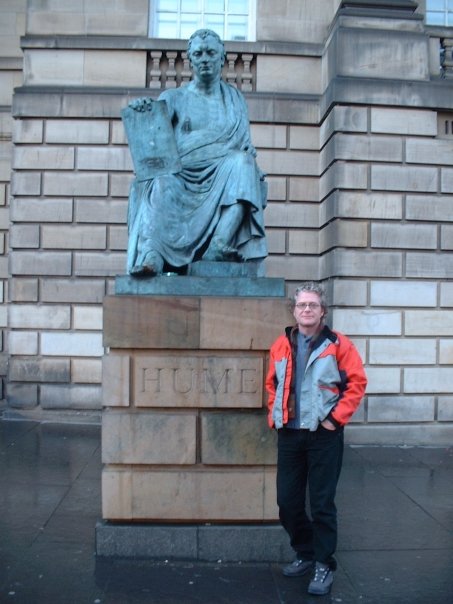
Why? Because correlation is the biggest hint of where causation might be found. The Hume and Ifamous Scottish philosopher, David Hume, laid out some rules for judging causes and their effects. The third rule says there must be constant union between the cause and effect (and it is this correlation that “chiefly” constitutes the causal relation). In fact, it is the constant conjunction between like causes and like effects that reinforces or justifies our belief in causation itself. In other words, without correlation, we would have no reason to believe in causation at all.

Hume also points out that we can observe correlations, but we cannot observe causation. If you ask someone to describe an observation of causation, you will hear a story about a correlation. Because causation cannot be directly observed, our belief in causation cannot be verified. Our belief in causation comes from an instinct to believe in causation and not from any rational argument or proof of causation. Hume points out that even animals are born with a belief in causation even without the benefit of the rational ability to study philosophical or scientific arguments.

To be sure, once you’ve identified a correlation, you can begin the work of determining whether the supposed causes are actually responsible for the effects you’ve observed. You may not get proof, but you can get more and more evidence so that your belief in the cause is more and more justified. No matter how much evidence you get, though, you will have started with a correlation.

So, it is true that correlation does not prove causation, but a statistically significant correlation is a good place to begin your search for a cause. If you know of a way to find causation without first observing a correlation or to prove causation, please leave it in the comments.

Performing masculinity and grief: A death of my own

When I was fifteen years old, my 25-year-old uncle died in a fire

While some older adults had feared for his well being for some time, his death was sudden, unexpected, and extremely traumatic for me. In times of grief, we all experience mixed emotions, but I was overwhelmed by feelings of confusion and isolation.

In the days following his death, my time was spent among both close and distant relatives in the home of my grandparents. When people interacted with me at all, it was generally to tell me to give comfort to someone else (“Go hug your grandfather.” “Hold your grandmother’s hand.”). I did my best, and I got through it. I had been to funerals before, but this was the first time I was so close to the deceased and so aware of the judgments of the people attending the funeral and receptions at the home later. Someone, usually a woman, didn’t cry enough or dared to wear pants to a funeral. Someone else, usually a man, fell to pieces and couldn’t keep it together. Certain friends should not have dared to show their faces, and others had no excuse for not coming. Or so it was stated by the chorus of judgment and scorn.

I tried my best to assimilate funeral normativity, but it really didn’t make sense to me. Years later, I cried at my grandfather’s funeral. This seemed a reasonable to me, and I didn’t predict being judged for it. After the funeral, one of my relatives asked me what I did for a living. I told her I was a writer. She said, “I knew you must be some kind of sensitive artist or something.” So much for the freedom to openly grieve for a close relative at his funeral. Do women face this kind of judgment?

But men who do not express emotions openly aren’t free from judgment or consequences, either. Kenneth Doka, an expert of grief counseling, said in an interview, ‘We do a strange thing with grieving styles. I always say we disenfranchise instrumental grievers early in the process. “What’s wrong with this person? Why isn’t he crying?”’ The man who manages his grief by working through it with projects, helping others, and so on is ignored. The man who emotes openly is criticized. Doka points out that more emotive grievers are penalized later (Why isn’t she over it yet?).

My uncle’s funeral may be when I first developed my revulsion at smug hypocrisy and self-righteous pity. I can remember one aunt declaring, loudly, “Well, if his death had anything to do with drugs, I just don’t want to know about it. That is not what is important now.” And this may also be when I first became aware of paradox. If she believed what she said, she would not have said it, and if she said it, she obviously didn’t believe it. (And a lifelong love of philosophy is born.) Anyway, I also developed my own sense of righteous indignation toward people who couldn’t offer condolences without poking people with daggers in the process.

In my first experience with traumatic grief, the people I would normally turn to for emotional support were all overwhelmed emotionally and intellectually. I don’t blame or resent anyone for it, but I was alone with my grief and my first experiences with this kind of loss. Shortly thereafter, an acquaintance was killed in a motorcycle accident, and I just never took the continued existence of anyone for granted again. I also accepted grieving as a solitary activity.

The next traumatic loss I experienced was described in an earlier post. My niece and nephew drowned on Mother’s Day (May 10) in 1992. The single most striking feature of this grief experience for me is the memory of many friends, coworkers, and family members coming to me to express their condolences and sincere concern for the suffering and recovery of my ex-wife. People lamented that it must be extremely hard on my wife, and I was admonished to take good care of her, as her suffering must be immense. I tried to do those things, of course, as I tried to manage my own emotions and continue to care for my children (I was an at-home dad at the time) and maintain a functioning household.

During this time, I had thoughts that terrified me and flooded me with shame. I began daydreaming, almost longing, for the death of someone who would be important to no one but me. A death that would bring me the kind of comfort and concern that had been reserved for my ex-wife during what was certainly the most challenging and traumatic event of my life to that point. I was horrified to think that I could wish anyone dead. Of course, no one in the world is important only to me. Everyone I love is loved by others as well. Further, I wouldn’t trade any of my loved ones for “good grieving.” (I will add that one friend in particular stood by me and cared for me throughout.)

The true fantasy, of course, was that someone would step in to help me through my current grief, not that I wanted anyone to die. Still, these thoughts became pervasive and persistent enough to plague me with guilt and interfere even more with my recovery. What I really wanted was to receive the same support I was expected to give. I don’t really want to be the only person in the world being cared for; I just want a reciprocal arrangement. I don’t know whether every man feels the same way, but I know I’m not the only one.

Why is it that being a man is to be sentenced to a life bereft of emotional support? When women say they want to meet a sensitive man, they generally mean they want to meet a man who attends to their emotional needs, not a man who openly expresses his own emotional needs let alone a man openly expresses his emotional frailty.

I dream of a world where grief is not gendered and where masculinity is not marked by solitary sorrow.

Horton’s Taxonomy of Racial Prejudice

It seems we keep having people make racist remarks and then proclaim, defensively, that they are not racists. Some people are so hostile that their claims of innocence are both laughable and infuriating, but others seem genuinely bemused by the accusation that they are racist. It doesn’t seem possible that anyone could be so clueless, their critics think, that their attitudes would not be obvious to them. In other cases, people strive with everything they have against being racist, only to find to their dismay and horror that they have unconscious racial biases.

In order to sort things out, I think we need to recognize a few categories of racism:

1. Overt racial hostility. In this category we have white supremacists (or other kinds of supremacists, even, depending on your location and circumstances). People in this category believe other races are inferior and will not apologize for saying so. We can renounce them, but we aren’t likely to shame them, as they are quite self-righteous in their belief in their own superiority (leaving their latent fears and anxieties aside for the moment).

2. Racial Prejudice. Some people say they don’t hate anyone or want anyone harmed, but they just happen to believe it is a brute fact that people from different races are different and have different abilities and preferences. People in this category can be the most confounding, as they might say things that are outlandish to the rest of us and then become extremely offended that anyone could possibly accuse them of racism. “I don’t hate such and such people, but they sure hate hard work. God love ‘em.”

3. Racial insensitivity. Sometimes people genuinely don’t mean any harm at all but have no idea how their comments may hurt others. Assuming a person of a particular race enjoys a certain kind of music, dance, food, or whatever may seem completely reasonable to you while it reduces that person to a broad stereotype. Even if the person does happen to like that music or food, he or she may resent you making any assumptions about their taste based merely on race or ethnicity.

4. Racial privilege. A member of my family once said he couldn’t understand why certain groups were always complaining about police harassment. He mentioned that he had many experiences with the police and he had always been treated with respect and courtesy. It didn’t occur to him that his skin color, sexual orientation, and socioeconomic class had anything to do with his treatment. That certain groups are targeted for mistreatment seemed inconceivable to him because he never had to experience what others endure regularly. This is the nature of racial privilege. (Yes, many kinds of privilege exist, but they aren’t relevant to this discussion.)

5. Unconscious and undesired racial bias. Finally, we all have biases without realizing it. When people take psychological tests (you can take one here) to see what biases they have, they may be chagrined to find they are biased against others without wanting to, but some of us are even surprised to find we hold implicit biases against our own social groups. Even those who are aware of no bias whatsoever find that some biases are so deeply entrenched that they are difficult to detect. Ironically, those with the least ill feelings toward other races are, in my experience, more aware of implicit bias. Confront an obvious racist about overt racial attitudes, and he or she will often declare, loudly, that he or she is completely indifferent to race. In my experience, those who are most committed to ending racial prejudice are the ones who are also most willing to examine their own implicit biases. Such is life.